Table of Content
Monday
22
June
2026
Why Was the Eiffel Tower Built in the Heart of Paris
Monday
22
June
2026
Why Was the Eiffel Tower Built in the Heart of Paris
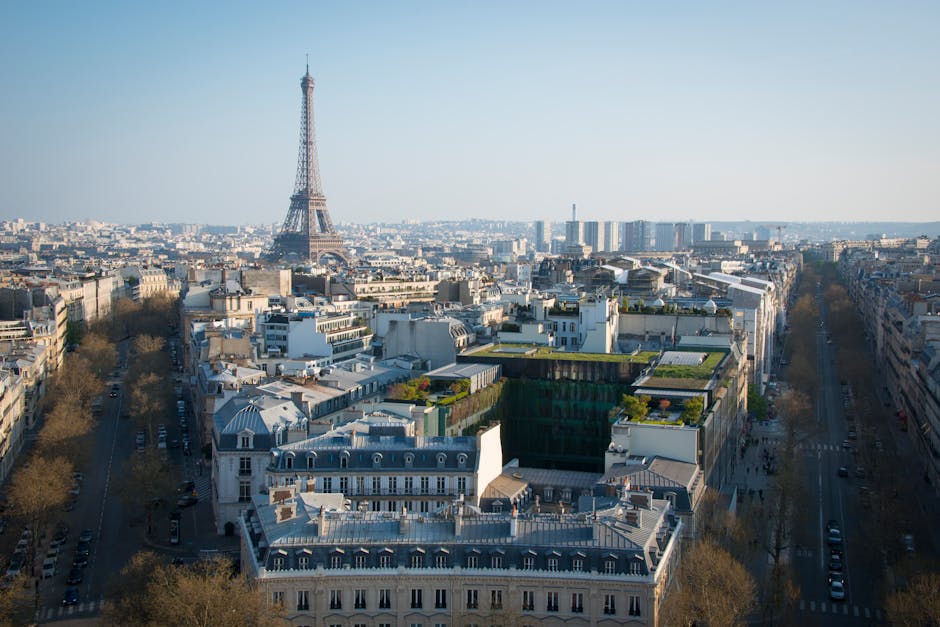
<div class="mp-article"> <p class="mp-lead">Completed in exactly two years, two months, and five days, the Eiffel Tower was unveiled as the 324-meter centerpiece of the 1889 Exposition Universelle to celebrate the centennial of the French Revolution. How did a temporary iron exhibit survive the fierce protests of the Parisian elite to become an eternal global icon?</p> <div class="mp-sommaire"> <p class="mp-sommaire-titre">Contents</p> <ol> <li><a href="#the-historical-purpose-behind-the-eiffel-tower-construction">The Historical Purpose Behind the Eiffel Tower Construction</a></li> <li><a href="#gustave-eiffel-winning-vision-paris">Gustave Eiffel and the Winning Vision for Paris</a></li> <li><a href="#artistic-resistance-industrial-iron-aesthetic">Artistic Resistance to the Industrial Iron Aesthetic</a></li> <li><a href="#engineering-feats-worlds-tallest-iron-structure">Engineering Feats of the World’s Tallest Iron Structure</a></li> <li><a href="#scientific-utility-preservation-landmark">Scientific Utility and the Preservation of the Landmark</a></li> <li><a href="#refined-living-near-iconic-champ-de-mars">Refined Living Near the Iconic Champ de Mars</a></li> </ol> </div> <h2 id="the-historical-purpose-behind-the-eiffel-tower-construction">The Historical Purpose Behind the Eiffel Tower Construction</h2> <p>Built for the 1889 Exposition Universelle, the 324-meter Eiffel Tower celebrated the French Revolution’s centennial. Originally a temporary iron exhibit by Gustave Eiffel, it survived demolition by becoming a vital radiotelegraphic and scientific hub.</p> <h3>Celebrating the centennial of the French Revolution</h3> <p>The Third Republic sought a bold statement of national pride. They needed to honor the 1789 anniversary with a monumental gesture, and this political move signaled stability to the world. The tower symbolized the triumph of the Republic, functioning as a secular cathedral of progress. You can explore the <a href="https://news.cnrs.fr/articles/who-built-the-eiffel-tower" target="_blank">tower’s role in the centennial</a> for deeper historical context.</p> <p>The project was inherently temporary. It only held a twenty-year lease, and the Champ de Mars location was never intended to be permanent.</p> <h3>Showcasing French industrial supremacy at the Exposition Universelle</h3> <p>The 1889 World’s Fair was a prestige platform. France intended to outshine all previous international exhibitions, and the tower served as a gateway proving that French engineering was the most advanced globally. Technological superiority was the ultimate goal: iron became the material of the future, replacing stone with a lattice of immense strength.</p> <h3>The 1889 World’s Fair as a global stage for innovation</h3> <p>Millions of visitors flocked to Paris for this cultural gathering, expecting to see the impossible made real. The 300-meter challenge was a race against gravity, pushing architectural limits to the extreme. International guests were stunned, and the ascent offered a unique view of the city, helping visitors decide <a href="https://www.merveil-paris.com/en/blog/what-to-visit-in-paris" target="_blank">what to visit in Paris</a> from the sky.</p> <div class="mp-encadre"> <p><strong>A record that stood for forty years:</strong> Upon its completion in 1889, the Eiffel Tower became the tallest man-made structure in the world, a title it held for four decades.</p> </div> <h2 id="gustave-eiffel-winning-vision-paris">Gustave Eiffel and the Winning Vision for Paris</h2> <p>While the political motive was clear, the actual selection of the design required a fierce competitive process to find a viable architect.</p> <h3>The 1886 competition and the selection of the iron tower</h3> <p>The 1886 competition in the Journal Officiel invited architects to study a 300-meter iron tower. Over 100 projects were submitted for the Champ de Mars, and most were rejected as physically impossible. Gustave Eiffel’s proposal triumphed because his plan was technically sound and detailed; his firm mastered bridge technology, making the project viable. You can explore <a href="https://news.cnrs.fr/articles/who-built-the-eiffel-tower" target="_blank">the details of his winning entry</a> for more information. Initial skepticism was widespread among Parisians, as many experts doubted a structure that tall could withstand the force of the wind.</p> <h3>Collaboration with engineers Koechlin and Nouguier</h3> <p>Émile Nouguier and Maurice Koechlin were the primary structural masterminds behind the concept. They envisioned a giant metallic pylon, though Eiffel initially showed little interest in their early sketches. The team utilized mathematical precision to ensure stability: the lattice design was calculated to resist extreme wind pressure, and every angle served a specific structural purpose. This design represented a bold transition from horizontal to vertical, applying proven railway bridge techniques to a vertical monument.</p> <h3>Stephen Sauvestre’s architectural refinements for public appeal</h3> <p>Stephen Sauvestre added decorative elements to the raw iron, introducing the monumental arches at the base and glass halls that transformed the skeleton into a building. The tower needed to look elegant to win over the committee, so Sauvestre added a glass pavilion and a bulbous top. This aesthetic balance helped the project gain approval, and the result was a refined blend of raw power and sophisticated style.</p> <h2 id="artistic-resistance-industrial-iron-aesthetic">Artistic Resistance to the Industrial Iron Aesthetic</h2> <p>Despite the technical victory, the tower faced a brutal backlash from the cultural guardians of traditional French beauty.</p> <h3>The protest against the Tower of Monsieur Eiffel by the elite</h3> <p>Renowned creators led the charge. Writers like Maupassant and painters signed the 1887 petition, denouncing the “hateful column of bolted tin” publicly. Specific fears fueled their anger: they believed this iron mass would crush the city’s soul, and critics compared the structure to a giant factory chimney. The elite called it a “truly tragic street lamp,” and this bitterness defined the era’s cultural resistance.</p> <h3>Comparing iron industrialism to the classic stone of Paris</h3> <p>Parisian charm relied on Haussmannian stone. The city breathed through limestone and classical symmetry, and this tower broke every rule of urban harmony. Critics feared it would dwarf landmarks like Notre-Dame, treating it as an alien intrusion into a sacred space. Height was the primary insult: the tower’s scale threatened the historic skyline, and intellectuals saw it as a blow to French heritage.</p> <h3>How public success eventually silenced the cultural critics</h3> <p>Ticket sales proved the critics wrong. Two million people visited during the 1889 fair, and the public loved the view and the thrill. The silhouette soon felt natural, becoming a popular destination for <a href="https://www.merveil-paris.com/en/blog/romantic-getaways-in-paris" target="_blank">romantic getaways in Paris</a> almost instantly. Eiffel defended his masterpiece firmly, arguing that the tower possessed its own unique, colossal beauty, and engineering had found its own aesthetic.</p> <h2 id="engineering-feats-worlds-tallest-iron-structure">Engineering Feats of the World’s Tallest Iron Structure</h2> <p>Beyond the aesthetic debate, the sheer logistical reality of the construction was a miracle of nineteenth-century organization.</p> <h3>Utilizing bridge-building techniques for vertical height</h3> <p>Gustave Eiffel selected puddle iron for the framework. This refined material offered exceptional resistance to wind and corrosion, creating a structure that was remarkably lightweight yet rigid. Temporary hydraulic jacks were employed during the assembly, allowing engineers to level the four massive pillars with absolute precision. Such accuracy was vital for the first platform’s alignment, and safety protocols remained a priority throughout: only one worker died during the entire construction, a record that was rare for the industrial era.</p> <h3>The precision of 18,038 metallic parts and millions of rivets</h3> <p>The pre-fabrication process took place in the Levallois-Perret factory, where every component was designed to the exact millimeter before arriving on-site. This meticulous planning eliminated guesswork during the final assembly. Only 250 workers were needed on-site at the peak of construction, functioning like a giant, synchronized machine. Teams of riveters secured 2.5 million rivets to hold the iron parts together, and this manual labor ensured the tower’s legendary durability.</p> <ul> <li>18,038 iron parts</li> <li>2.5 million rivets</li> <li>7,300 tons of iron</li> <li>250 workers on site</li> </ul> <h3>Completing the tallest man-made structure in record time</h3> <p>The tower was finished in just over two years, an incredible pace for the 1880s that easily surpassed the height of the Washington Monument. The scale of the achievement was historic: it remained the world’s tallest building for forty years, and no other architectural project came close to its height during that time. The project stayed on schedule and on budget, a logistical triumph by any measure.</p> <div class="mp-cta-wrap"> <a href="https://www.merveil-paris.com/quartiers/tour-eiffel?no_of_people=2" class="mp-cta">Book your stay near the Eiffel Tower</a> </div> <h2 id="scientific-utility-preservation-landmark">Scientific Utility and the Preservation of the Landmark</h2> <p>Once the fanfare of the World’s Fair faded, the tower needed a practical reason to exist or face the wrecking ball.</p> <h3>The twenty-year permit and the initial threat of demolition</h3> <p>The original contract for the iron structure was remarkably fragile. It stipulated that the tower would be dismantled in 1909, and it was never meant to be a permanent fixture of Paris. Local opposition remained vocal and persistent, with many Parisians still lobbying the city aggressively to reclaim the land for traditional use. Financial necessity dictated a change in strategy: Eiffel had to prove the tower was useful for more than tourism, and survival depended on finding a functional purpose.</p> <h3>Gustave Eiffel’s push for meteorology and aerodynamics research</h3> <p>Eiffel transformed the summit into a sophisticated laboratory, installing specialized equipment for scientific study and inviting researchers to use the height for unique experiments. Aerodynamics research became a primary focus, with wind resistance and air pressure studied with precision. These findings were vital for early aviation development and engineering. This strategic pivot changed the tower’s narrative: science provided the legitimate reason to keep it standing, and it was no longer just a monument but a tool.</p> <h3>Strategic importance as a radio transmitter during the World Wars</h3> <p>The tower became a giant antenna for the military. In 1914, it intercepted German radio signals during the Battle of the Marne, and this intelligence helped the French army secure a victory. The role of the structure continued to evolve, transitioning into a central hub for television and radio broadcasting and becoming essential infrastructure for the entire country. Its utility had finally ensured its survival.</p> <h2 id="refined-living-near-iconic-champ-de-mars">Refined Living Near the Iconic Champ de Mars</h2> <p>To truly appreciate the history of this monument, one must experience the neighborhood that grew around its iron feet.</p> <h3>Choosing an apartment over a hotel for group stays</h3> <p>Standard hotel rooms often feel cramped and physically separated, and this fragmentation disrupts the flow of a stay. A private residence offers expansive shared spaces where everyone gathers naturally. Families find immense value in gathering within a real living room, and such proximity makes following <a href="https://www.merveil-paris.com/en/blog/paris-with-kids-guide" target="_blank">our family guide to Paris</a> much easier. Choosing an apartment provides a central location with total independence, avoiding the rigid schedules of traditional hospitality.</p> <h3>The Merveil Paris signature of space and palace services</h3> <p>Our apartments feature fully equipped kitchens and elegant, architect-led decor. For those seeking premium comfort, we offer the <a href="https://www.merveil-paris.com/en/apartments/suite-signature-desaix-ii" target="_blank">Signature Suite Desaix II</a> near the tower, where every detail reflects Parisian refinement. Palace-grade services like private chefs and concierge support are always available, bridging the gap between home and hotel with the discretion of a private club. Some units host up to fourteen people comfortably in 168 m² of luxury, a scale that is truly rare for central Paris.</p> <div class="mp-tableau-wrap"> <table class="mp-tableau"> <thead> <tr> <th>Service</th> <th>Merveil Paris Apartment</th> <th>Traditional 5-Star Hotel</th> </tr> </thead> <tbody> <tr> <td>Space for Groups</td> <td>Up to 14 guests under one roof</td> <td>Multiple separate rooms required</td> </tr> <tr> <td>Kitchen Access</td> <td>Full professional kitchen</td> <td>Mini-bar only</td> </tr> <tr> <td>Personalized Concierge</td> <td>24/7 dedicated digital & human support</td> <td>General lobby desk</td> </tr> <tr> <td>Private Chef Option</td> <td>Available for in-home dining</td> <td>Restaurant dining only</td> </tr> <tr> <td>Average Room Size</td> <td>160m²+ (Multiple bedrooms)</td> <td>25–45m² (Single room)</td> </tr> </tbody> </table> </div> <h3>Exclusive experiences near the seventh arrondissement’s landmark</h3> <p>Staying near the tower means seeing the golden lights every night. You can find <a href="https://www.merveil-paris.com/quartiers/tour-eiffel" target="_blank">luxury apartments near the Eiffel Tower</a> located within walking distance, and the monument becomes your personal backdrop. We encourage booking directly through the Merveil website for the best rates, as direct communication ensures a bespoke and personal stay from the start. Living here allows you to see Paris through a local lens, enjoying the prestige of the seventh arrondissement in a refined setting.</p> <p>This iron masterpiece, born from the 1889 centennial and saved by scientific innovation, remains the defining symbol of French industrial supremacy. Experience this legacy firsthand by securing your stay near the Champ de Mars, where history meets modern elegance.</p> <div class="mp-faq"> <details class="mp-faq-item"> <summary>Why was the Eiffel Tower originally constructed in Paris?</summary> <p>The Eiffel Tower was commissioned as the magnificent centerpiece for the 1889 Exposition Universelle. This grand event served a dual purpose: it showcased France’s industrial prowess on a global stage and celebrated the centennial of the French Revolution. Designed by Gustave Eiffel, the structure was intended to demonstrate that French engineering could achieve the unthinkable by erecting a 300-meter iron tower. It stood as a secular cathedral of progress, symbolizing the stability and creative power of the Third Republic.</p> </details> <details class="mp-faq-item"> <summary>Who were the masterminds behind the tower’s design?</summary> <p>While the monument bears the name of Gustave Eiffel, it was a collaborative triumph of visionary minds. The primary structural concepts were developed by Maurice Koechlin and Émile Nouguier, two brilliant engineers from Eiffel’s firm who specialized in advanced bridge-building techniques. To ensure the iron skeleton met the aesthetic standards of Parisian elegance, architect Stephen Sauvestre was brought in to refine the design. He added the monumental decorative arches at the base and the glass halls, transforming a functional industrial frame into a sophisticated architectural landmark.</p> </details> <details class="mp-faq-item"> <summary>Why did many Parisians originally oppose the monument?</summary> <p>During its construction, the tower faced fierce resistance from a group of elite artists and writers who viewed the iron structure as a “monstrous” intrusion. Critics, including famous figures like Guy de Maupassant, feared that this “hateful column of bolted tin” would overshadow the classical stone beauty of landmarks like Notre-Dame. They compared the design to a giant factory chimney, arguing it lacked the refined soul of traditional French architecture. However, this cultural backlash was quickly silenced when two million visitors flocked to the tower during the World’s Fair, instantly falling in love with its daring silhouette and breathtaking views.</p> </details> <details class="mp-faq-item"> <summary>How was the Eiffel Tower saved from being dismantled?</summary> <p>The tower was initially granted only a twenty-year permit and was scheduled for demolition in 1909. To preserve his masterpiece, Gustave Eiffel reinvented the tower as an indispensable scientific laboratory, installing equipment for meteorological observations, pressure measurements, and aerodynamics research. The ultimate salvation came through the birth of wireless telegraphy. By proving the tower’s strategic value as a massive radio antenna, capable of communicating with the military and intercepting enemy signals during the World Wars, Eiffel secured its permanent place in the Parisian skyline.</p> </details> </div> <div class="mp-cta-wrap"> <a href="https://www.merveil-paris.com/quartiers/tour-eiffel?no_of_people=2" class="mp-cta">Book your stay near the Eiffel Tower</a> </div> </div>

