Table of Content
Paris arrondissements : 2026 guide to the city spiral
The essential to remember: Paris is organized in a logical clockwise spiral starting at the Louvre, where the last two digits of any zip code instantly reveal the district. This "escargot" layout simplifies navigation between the historic 1st and the vibrant 20th. Since 2019, the first four districts have merged into "Paris Centre," streamlining the city's prestigious heart for a more seamless experience.
Does the spiral layout of Paris’s arrondissements feel like a complex maze when planning your trip? This guide deciphers the city’s clockwise snail pattern and explains the historic creation of Paris Centre to help you navigate the capital with the confidence of a local. Discover the distinct personality of each district, from the royal heritage of the 1st arrondissement to the bohemian heights of Montmartre, ensuring your next stay is perfectly tailored to your lifestyle.
Sommaire
Deciphering the Spiral Layout of Paris Districts
Paris can sometimes feel like a beautiful maze, but there is a specific, almost poetic logic to its organization that once understood, changes how you see the city.
The Logic Behind the Clockwise Snail Pattern
The city is famously shaped like an "escargot" or snail. It starts at the Louvre in the 1st district and circles outward in a clockwise motion. It is a geometric masterpiece. As the numbers increase, the spiral expands further from the Seine. This clockwise growth ends at the 20th district in the east. The layout perfectly defines the city's unique circular development. Administrative changes have refined this system over time. Notably, Paris became a single collectivity in 2019. This reform streamlined the twenty districts under one unified status. The first four districts now share a single town hall known as "Paris Centre." It is a modern, functional tweak to a centuries-old urban arrangement.
How to Identify Locations Using Postal Codes
The 750XX zip code trick is your best friend. The last two digits always reveal the specific district. For instance, 75001 belongs to the 1st, while 75020 marks the 20th. Official geographic codes offer even more precision. Insee assigns specific codes like 75101 for the 1st district. These digits help with navigation and ensuring official addresses are entirely accurate. Lower numbers signal that you are in the historic, central heart. Higher numbers generally point toward more residential or peripheral neighborhoods. It serves as a very reliable mental map. The zip code is your compass in Paris; 75001 means you are at the gates of the Louvre, while 75016 places you in the leafy west.
The Historic Core From the Louvre to Le Marais
Now that you understand the spiral, let’s zoom into the very center where the history of the "City of Light" truly began.
1st and 2nd Arrondissements: Royal Heritage and Passages
The 1st district represents the majestic heartbeat of royal Paris. It is the prestigious home of the Louvre Museum and the Tuileries Garden. Here, every stone breathes grand history. Walking into the 2nd district reveals the Sentier’s rich textile heritage. You will find charming 19th-century glass-roofed arcades hidden away. These nostalgic passages offer a quiet, light-filled escape. This central area is defined by iconic landmarks and vibrant local life:
Louvre Museum
Palais Royal
Galerie Vivienne
Rue Montorgueil food market
Choosing a residence here places you steps from world-class art. It remains the ultimate choice for travelers who prefer the intimacy of walking everywhere.
3rd and 4th Arrondissements: The Soul of Le Marais
Le Marais spans both the 3rd and 4th districts with effortless elegance. Imagine narrow medieval streets lined with grand private mansions. It is a chic sanctuary for avant-garde art galleries. The 4th district holds the city’s most essential landmarks. Notre-Dame and the Île Saint-Louis are timeless stops. The symmetrical Place des Vosges offers a perfect escape where old-world charm meets modern life. To truly experience this atmosphere, consider staying in a luxury suite in the Marais. You can also enjoy a refined stay in the heart of the 4th. The cultural density here is simply unmatched. From the Picasso Museum to the Centre Pompidou, the area is a feast for the senses. It never sleeps.
Intellectual Charm and Icons of the Rive Gauche
Crossing the Seine to the Left Bank, the atmosphere shifts from royal grandeur to intellectual elegance and iconic skyline views.
5th and 6th Arrondissements: Latin Quarter to Saint-Germain
Explore the 5th, the Latin Quarter. It is defined by the Sorbonne and the Panthéon. Students and bookshops create a lively, historic energy. Move to the 6th and Saint-Germain-des-Prés. This is the literary heart of Paris. Famous cafés like Les Deux Magots hosted Hemingway and Sartre. The Jardin du Luxembourg is nearby. Choosing the right base is essential for your experience. You can find more details in our comprehensive guide on where to stay in Paris to match your travel style. The vibe here is sophisticated, expensive, and quintessentially Parisian. It is perfect for those who love long walks and classic architecture. You will feel the city's soul in every cobblestone.
7th Arrondissement: The Shadow of the Eiffel Tower
The 7th is a prestigious, quiet residential area. This is where the Eiffel Tower stands tall. Wide avenues and hidden courtyards define this upscale neighborhood. Museums are a highlight here. The Musée d’Orsay and Musée Rodin offer world-class art without the 1st arrondissement's crowds. The Invalides dome adds a golden touch to the skyline. For a truly memorable stay, consider an apartment near the Eiffel Tower or our Signature Suite in the 7th for ultimate comfort. Staying in the 7th means waking up to the Iron Lady, an experience that defines the dream of Paris for many.
Grand Avenues and the Pulse of Eastern Paris
Moving back to the Right Bank, we encounter the contrast between high-fashion prestige and the trendy, local pulse of the east.
8th and 9th Arrondissements: Luxury and Opéra
The 8th is the "Golden Triangle." It features the Champs-Élysées and luxury fashion houses. This is the Paris of haute couture and five-star palaces. The 9th offers a different energy. It’s home to the Opéra Garnier and the massive Galeries Lafayette. The "South Pigalle" area is trendy and full of life. It’s great for shopping. For those seeking an uncompromising stay, consider booking a luxury suite near the Champs-Élysées. This area perfectly balances historic architecture with modern, high-end convenience. From historic theaters to gourmet food halls, these districts are always buzzing. They represent the glamorous side of the city that many travelers dream of experiencing.
10th and 11th Arrondissements: Canal and Nightlife
The 10th is all about Canal Saint-Martin. It’s the spot for picnics by the water and cool coffee shops. The vibe is decidedly "bobo" (bourgeois-bohemian). The 11th is the heart of Parisian nightlife. Areas like Bastille and Oberkampf are packed with bars and innovative restaurants. It’s authentic, loud, and very local. It feels like the real Paris. Some of the city's most exciting young chefs are opening bistros here. It’s a foodie's heaven away from the typical tourist traps, offering bold flavors in a relaxed setting. Experience the local rhythm through these essential activities:
Canal Saint-Martin strolls
Marché d'Aligre
Bastille nightlife
Trendy coffee roasters
Parks and Panoramic Views in the Outer Districts
As we reach the outer edges of the spiral, the city opens up into vast green spaces and hilltops with breathtaking views.
14th to 17th Arrondissements: Residential Prestige
The 14th and 15th are family-friendly and calm. Montparnasse offers history and the Catacombs. These areas feel like real neighborhoods where Parisians actually live. The 16th is the most affluent district. It’s bordered by the Bois de Boulogne and filled with embassies. The 17th, especially Batignolles, has a lovely village feel with local markets.
| Arrondissement | Atmosphere | Key Landmark | Best For | Distance to City Center |
|---|---|---|---|---|
| 14th | Historic and artistic | Paris Catacombs | History lovers and quiet exploration | ~15 min metro |
| 15th | Calm and family-oriented | Parc André Citroën | Families and longer stays | ~15–20 min metro |
| 16th | Elegant and affluent | Trocadéro & Bois de Boulogne | Luxury travelers and embassy district | ~10–15 min metro |
| 17th | Village-like and trendy | Batignolles Park | Local lifestyle and markets | ~15 min metro |
These districts often offer larger apartments. They are perfect for long-term stays or families seeking peace.
18th to 20th Arrondissements: Artistic Heights
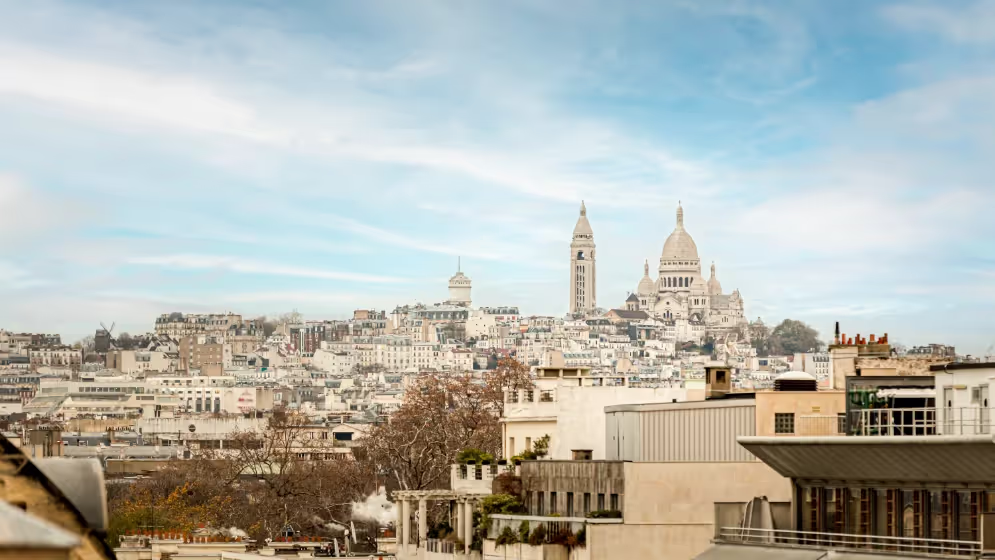
The 18th is Montmartre. It’s the hill of artists and the Sacré-Cœur. Despite the tourists, the backstreets remain incredibly romantic and bohemian. The 19th and 20th are the new frontiers. Parc des Buttes-Chaumont is a local favorite. The Père Lachaise cemetery in the 20th is a hauntingly beautiful place for a walk. These areas are multicultural and creative. You can discover hidden treasures in these peripheral districts via official city routes. From the top of the 18th or 20th, you can see the entire city. It’s a perspective few tourists get.
Selecting the Right District for Your Parisian Stay
Choosing where to drop your bags is the most important decision for your trip, as it dictates your daily rhythm.
Best Areas for First-Time Visitors and Families
For first-timers, the 1st or 7th are unbeatable. You are close to the major monuments. It saves time on transport and maximizes sightseeing. Families should consider the 4th or 6th. These areas are walkable and safe. There are plenty of parks like Luxembourg or Place des Vosges nearby. It’s easy for kids. Finding the best neighborhoods for a short stay in Paris ensures you experience the city's magic without the stress of long commutes between iconic sites.
1st for museums
4th for history
6th for parks
7th for views
The Merveil Paris Advantage in Prime Locations
Merveil Paris offers the best of both worlds. You get the space of a private home with 5-star services. Our apartments are in the most desirable districts. We cater to large groups and families. Some suites host up to 14 guests. This is rare in central Paris. You won't need to book separate hotel rooms. To secure your sanctuary, book directly on Merveil Paris and explore our collection of Luxury Apartments in Paris for the most personalized experience. Experience the city like a local. Our concierge and private chefs ensure a seamless stay. It’s the ultimate way to enjoy the Parisian lifestyle. From the Louvre’s royal spiral to the bohemian heights of Montmartre, mastering Paris arrondissements is the key to an effortless stay. Secure your luxury suite with Merveil Paris now to experience these iconic districts from the city's most prestigious addresses. Your refined Parisian chapter begins here.
FAQ
How are the various districts of Paris organized?
Paris is elegantly structured into 20 administrative districts known as arrondissements, which unfold in a clockwise spiral starting from the city's historical center. This unique layout, often referred to as the "escargot" or snail shell, begins at the 1st arrondissement near the Louvre and expands outward toward the city's edges. As the numbers increase, you generally move further from the banks of the Seine. Understanding this spiral is the key to navigating the city, helping you visualize the transition from the royal heart of the city to the vibrant, residential neighborhoods of the outer ring.
Which Paris districts are considered the most central?
The true heart of Paris is comprised of the first four arrondissements, which were recently unified administratively under the name "Paris Centre." This area encompasses the 1st, 2nd, 3rd, and 4th districts, stretching from the majestic halls of the Louvre to the medieval charm of Le Marais and the iconic towers of Notre-Dame. Staying in these central neighborhoods allows you to experience the city's most storied heritage on foot. At Merveil Paris, we curate exceptional residences within these historic quarters, offering our guests the privilege of waking up just steps away from the Palais Royal or the Place des Vosges.
What is the best neighborhood to stay in for a first trip to Paris?
For those visiting the City of Light for the first time, the 1st and 7th arrondissements offer an incomparable introduction. The 1st puts you at the doorstep of world-class museums and the Tuileries Garden, while the 7th provides that quintessential Parisian dream: a quiet, prestigious atmosphere with breathtaking views of the Eiffel Tower. Families and those seeking a more soulful experience often gravitate toward the 4th or 6th arrondissements. These districts blend historic elegance with beautiful green spaces like the Jardin du Luxembourg, making them perfect for leisurely strolls and discovering the literary spirit of the Left Bank.
What makes the 8th and 9th arrondissements unique?
The 8th arrondissement is the pinnacle of Parisian prestige, home to the "Golden Triangle" and the haute couture houses of the Champs-Élysées. It is a district of grand avenues and five-star refinement, ideal for those who appreciate the more glamorous side of the city. In contrast, the neighboring 9th arrondissement offers a vibrant blend of culture and commerce. From the architectural splendor of the Opéra Garnier to the trendy boutiques of South Pigalle and the bustling Grands Magasins, it is a district that perfectly captures the energetic pulse of modern Parisian life.
Paris arrondissements : 2026 guide to the city spiral
The essential to remember: Paris is organized in a logical clockwise spiral starting at the Louvre, where the last two digits of any zip code instantly reveal the district. This "escargot" layout simplifies navigation between the historic 1st and the vibrant 20th. Since 2019, the first four districts have merged into "Paris Centre," streamlining the city's prestigious heart for a more seamless experience.
Does the spiral layout of Paris’s arrondissements feel like a complex maze when planning your trip? This guide deciphers the city’s clockwise snail pattern and explains the historic creation of Paris Centre to help you navigate the capital with the confidence of a local. Discover the distinct personality of each district, from the royal heritage of the 1st arrondissement to the bohemian heights of Montmartre, ensuring your next stay is perfectly tailored to your lifestyle.
Sommaire
Deciphering the Spiral Layout of Paris Districts
Paris can sometimes feel like a beautiful maze, but there is a specific, almost poetic logic to its organization that once understood, changes how you see the city.
The Logic Behind the Clockwise Snail Pattern
The city is famously shaped like an "escargot" or snail. It starts at the Louvre in the 1st district and circles outward in a clockwise motion. It is a geometric masterpiece. As the numbers increase, the spiral expands further from the Seine. This clockwise growth ends at the 20th district in the east. The layout perfectly defines the city's unique circular development. Administrative changes have refined this system over time. Notably, Paris became a single collectivity in 2019. This reform streamlined the twenty districts under one unified status. The first four districts now share a single town hall known as "Paris Centre." It is a modern, functional tweak to a centuries-old urban arrangement.
How to Identify Locations Using Postal Codes
The 750XX zip code trick is your best friend. The last two digits always reveal the specific district. For instance, 75001 belongs to the 1st, while 75020 marks the 20th. Official geographic codes offer even more precision. Insee assigns specific codes like 75101 for the 1st district. These digits help with navigation and ensuring official addresses are entirely accurate. Lower numbers signal that you are in the historic, central heart. Higher numbers generally point toward more residential or peripheral neighborhoods. It serves as a very reliable mental map. The zip code is your compass in Paris; 75001 means you are at the gates of the Louvre, while 75016 places you in the leafy west.
The Historic Core From the Louvre to Le Marais
Now that you understand the spiral, let’s zoom into the very center where the history of the "City of Light" truly began.
1st and 2nd Arrondissements: Royal Heritage and Passages
The 1st district represents the majestic heartbeat of royal Paris. It is the prestigious home of the Louvre Museum and the Tuileries Garden. Here, every stone breathes grand history. Walking into the 2nd district reveals the Sentier’s rich textile heritage. You will find charming 19th-century glass-roofed arcades hidden away. These nostalgic passages offer a quiet, light-filled escape. This central area is defined by iconic landmarks and vibrant local life:
Louvre Museum
Palais Royal
Galerie Vivienne
Rue Montorgueil food market
Choosing a residence here places you steps from world-class art. It remains the ultimate choice for travelers who prefer the intimacy of walking everywhere.
3rd and 4th Arrondissements: The Soul of Le Marais
Le Marais spans both the 3rd and 4th districts with effortless elegance. Imagine narrow medieval streets lined with grand private mansions. It is a chic sanctuary for avant-garde art galleries. The 4th district holds the city’s most essential landmarks. Notre-Dame and the Île Saint-Louis are timeless stops. The symmetrical Place des Vosges offers a perfect escape where old-world charm meets modern life. To truly experience this atmosphere, consider staying in a luxury suite in the Marais. You can also enjoy a refined stay in the heart of the 4th. The cultural density here is simply unmatched. From the Picasso Museum to the Centre Pompidou, the area is a feast for the senses. It never sleeps.
Intellectual Charm and Icons of the Rive Gauche
Crossing the Seine to the Left Bank, the atmosphere shifts from royal grandeur to intellectual elegance and iconic skyline views.
5th and 6th Arrondissements: Latin Quarter to Saint-Germain
Explore the 5th, the Latin Quarter. It is defined by the Sorbonne and the Panthéon. Students and bookshops create a lively, historic energy. Move to the 6th and Saint-Germain-des-Prés. This is the literary heart of Paris. Famous cafés like Les Deux Magots hosted Hemingway and Sartre. The Jardin du Luxembourg is nearby. Choosing the right base is essential for your experience. You can find more details in our comprehensive guide on where to stay in Paris to match your travel style. The vibe here is sophisticated, expensive, and quintessentially Parisian. It is perfect for those who love long walks and classic architecture. You will feel the city's soul in every cobblestone.
7th Arrondissement: The Shadow of the Eiffel Tower
The 7th is a prestigious, quiet residential area. This is where the Eiffel Tower stands tall. Wide avenues and hidden courtyards define this upscale neighborhood. Museums are a highlight here. The Musée d’Orsay and Musée Rodin offer world-class art without the 1st arrondissement's crowds. The Invalides dome adds a golden touch to the skyline. For a truly memorable stay, consider an apartment near the Eiffel Tower or our Signature Suite in the 7th for ultimate comfort. Staying in the 7th means waking up to the Iron Lady, an experience that defines the dream of Paris for many.
Grand Avenues and the Pulse of Eastern Paris
Moving back to the Right Bank, we encounter the contrast between high-fashion prestige and the trendy, local pulse of the east.
8th and 9th Arrondissements: Luxury and Opéra
The 8th is the "Golden Triangle." It features the Champs-Élysées and luxury fashion houses. This is the Paris of haute couture and five-star palaces. The 9th offers a different energy. It’s home to the Opéra Garnier and the massive Galeries Lafayette. The "South Pigalle" area is trendy and full of life. It’s great for shopping. For those seeking an uncompromising stay, consider booking a luxury suite near the Champs-Élysées. This area perfectly balances historic architecture with modern, high-end convenience. From historic theaters to gourmet food halls, these districts are always buzzing. They represent the glamorous side of the city that many travelers dream of experiencing.
10th and 11th Arrondissements: Canal and Nightlife
The 10th is all about Canal Saint-Martin. It’s the spot for picnics by the water and cool coffee shops. The vibe is decidedly "bobo" (bourgeois-bohemian). The 11th is the heart of Parisian nightlife. Areas like Bastille and Oberkampf are packed with bars and innovative restaurants. It’s authentic, loud, and very local. It feels like the real Paris. Some of the city's most exciting young chefs are opening bistros here. It’s a foodie's heaven away from the typical tourist traps, offering bold flavors in a relaxed setting. Experience the local rhythm through these essential activities:
Canal Saint-Martin strolls
Marché d'Aligre
Bastille nightlife
Trendy coffee roasters
Parks and Panoramic Views in the Outer Districts
As we reach the outer edges of the spiral, the city opens up into vast green spaces and hilltops with breathtaking views.
14th to 17th Arrondissements: Residential Prestige
The 14th and 15th are family-friendly and calm. Montparnasse offers history and the Catacombs. These areas feel like real neighborhoods where Parisians actually live. The 16th is the most affluent district. It’s bordered by the Bois de Boulogne and filled with embassies. The 17th, especially Batignolles, has a lovely village feel with local markets.
| Arrondissement | Atmosphere | Key Landmark | Best For | Distance to City Center |
|---|---|---|---|---|
| 14th | Historic and artistic | Paris Catacombs | History lovers and quiet exploration | ~15 min metro |
| 15th | Calm and family-oriented | Parc André Citroën | Families and longer stays | ~15–20 min metro |
| 16th | Elegant and affluent | Trocadéro & Bois de Boulogne | Luxury travelers and embassy district | ~10–15 min metro |
| 17th | Village-like and trendy | Batignolles Park | Local lifestyle and markets | ~15 min metro |
These districts often offer larger apartments. They are perfect for long-term stays or families seeking peace.
18th to 20th Arrondissements: Artistic Heights
The 18th is Montmartre. It’s the hill of artists and the Sacré-Cœur. Despite the tourists, the backstreets remain incredibly romantic and bohemian. The 19th and 20th are the new frontiers. Parc des Buttes-Chaumont is a local favorite. The Père Lachaise cemetery in the 20th is a hauntingly beautiful place for a walk. These areas are multicultural and creative. You can discover hidden treasures in these peripheral districts via official city routes. From the top of the 18th or 20th, you can see the entire city. It’s a perspective few tourists get.
Selecting the Right District for Your Parisian Stay
Choosing where to drop your bags is the most important decision for your trip, as it dictates your daily rhythm.
Best Areas for First-Time Visitors and Families
For first-timers, the 1st or 7th are unbeatable. You are close to the major monuments. It saves time on transport and maximizes sightseeing. Families should consider the 4th or 6th. These areas are walkable and safe. There are plenty of parks like Luxembourg or Place des Vosges nearby. It’s easy for kids. Finding the best neighborhoods for a short stay in Paris ensures you experience the city's magic without the stress of long commutes between iconic sites.
1st for museums
4th for history
6th for parks
7th for views
The Merveil Paris Advantage in Prime Locations
Merveil Paris offers the best of both worlds. You get the space of a private home with 5-star services. Our apartments are in the most desirable districts. We cater to large groups and families. Some suites host up to 14 guests. This is rare in central Paris. You won't need to book separate hotel rooms. To secure your sanctuary, book directly on Merveil Paris and explore our collection of Luxury Apartments in Paris for the most personalized experience. Experience the city like a local. Our concierge and private chefs ensure a seamless stay. It’s the ultimate way to enjoy the Parisian lifestyle. From the Louvre’s royal spiral to the bohemian heights of Montmartre, mastering Paris arrondissements is the key to an effortless stay. Secure your luxury suite with Merveil Paris now to experience these iconic districts from the city's most prestigious addresses. Your refined Parisian chapter begins here.
FAQ
How are the various districts of Paris organized?
Paris is elegantly structured into 20 administrative districts known as arrondissements, which unfold in a clockwise spiral starting from the city's historical center. This unique layout, often referred to as the "escargot" or snail shell, begins at the 1st arrondissement near the Louvre and expands outward toward the city's edges. As the numbers increase, you generally move further from the banks of the Seine. Understanding this spiral is the key to navigating the city, helping you visualize the transition from the royal heart of the city to the vibrant, residential neighborhoods of the outer ring.
Which Paris districts are considered the most central?
The true heart of Paris is comprised of the first four arrondissements, which were recently unified administratively under the name "Paris Centre." This area encompasses the 1st, 2nd, 3rd, and 4th districts, stretching from the majestic halls of the Louvre to the medieval charm of Le Marais and the iconic towers of Notre-Dame. Staying in these central neighborhoods allows you to experience the city's most storied heritage on foot. At Merveil Paris, we curate exceptional residences within these historic quarters, offering our guests the privilege of waking up just steps away from the Palais Royal or the Place des Vosges.
What is the best neighborhood to stay in for a first trip to Paris?
For those visiting the City of Light for the first time, the 1st and 7th arrondissements offer an incomparable introduction. The 1st puts you at the doorstep of world-class museums and the Tuileries Garden, while the 7th provides that quintessential Parisian dream: a quiet, prestigious atmosphere with breathtaking views of the Eiffel Tower. Families and those seeking a more soulful experience often gravitate toward the 4th or 6th arrondissements. These districts blend historic elegance with beautiful green spaces like the Jardin du Luxembourg, making them perfect for leisurely strolls and discovering the literary spirit of the Left Bank.
What makes the 8th and 9th arrondissements unique?
The 8th arrondissement is the pinnacle of Parisian prestige, home to the "Golden Triangle" and the haute couture houses of the Champs-Élysées. It is a district of grand avenues and five-star refinement, ideal for those who appreciate the more glamorous side of the city. In contrast, the neighboring 9th arrondissement offers a vibrant blend of culture and commerce. From the architectural splendor of the Opéra Garnier to the trendy boutiques of South Pigalle and the bustling Grands Magasins, it is a district that perfectly captures the energetic pulse of modern Parisian life.

